
If you’re a registered nurse asking “Where can I earn the most in 2026?” — I need to stop you for a second. Because that question, as simple as it sounds, trips up thousands of nurses every year.
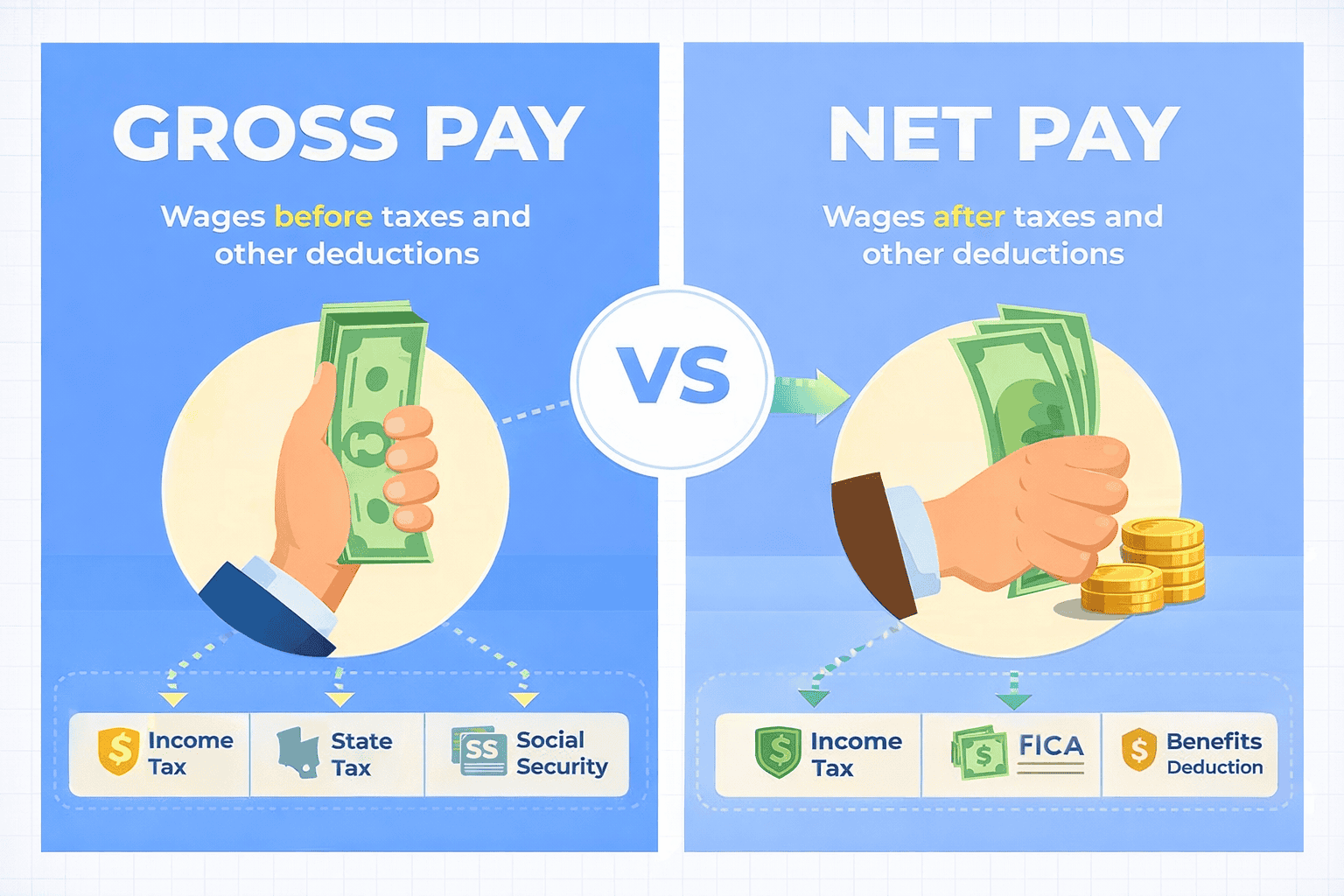
Here’s what I’ve seen in 15+ years advising compensation strategy: the nurse who chases the highest number on a salary chart often ends up with less in the bank than the one who did the math properly. Gross salary and real income are two very different things.
This guide breaks down nurse salary by state in 2026 — not just the top-line figures, but what those numbers actually mean for your savings, your lifestyle, and your career trajectory. By the time you finish reading, you’ll have a clear framework for deciding exactly where to plant your career next.
What Determines Nurse Salary by State in 2026
Before we rank anything, let’s agree on what matters. Most articles hand you a table of average salaries and call it a day. That’s genuinely not enough information to make a major career move.
Registered nurse compensation in 2026 is shaped by five overlapping forces, and understanding all five is what separates nurses who build real wealth from those who chase numbers on paper.
Demand vs. Supply. States experiencing active nurse shortages — particularly in rural and underserved regions — are bidding aggressively for talent. Arizona, North Carolina, and parts of the Midwest are seeing this right now. When demand outpaces supply, your negotiating power goes up, full stop.
Union Strength. California’s nursing unions (California Nurses Association, in particular) have been instrumental in pushing RN wages to the top of the national scale. States with strong collective bargaining protections consistently pay 10–20% more than comparable non-union markets.
Cost of Living. A $125,000 salary in San Francisco and a $125,000 salary in Nashville are not the same salary. After rent, food, transportation, and state tax, the San Francisco number can shrink dramatically. I’ll show you the math in the scenario section below.
Specialty and Setting. An ICU nurse at a Level I trauma center earns substantially more than a general med-surg floor nurse — sometimes $20,000–$40,000 more annually. Your unit, not just your state, determines a huge chunk of your income.
State Income Tax. This is the one most nurses underestimate. A state with no income tax — Texas, Florida, Washington, Nevada — effectively gives you a 4–9% raise over states with high income taxes, at zero extra effort on your part.
Highest Paying States for RNs in 2026
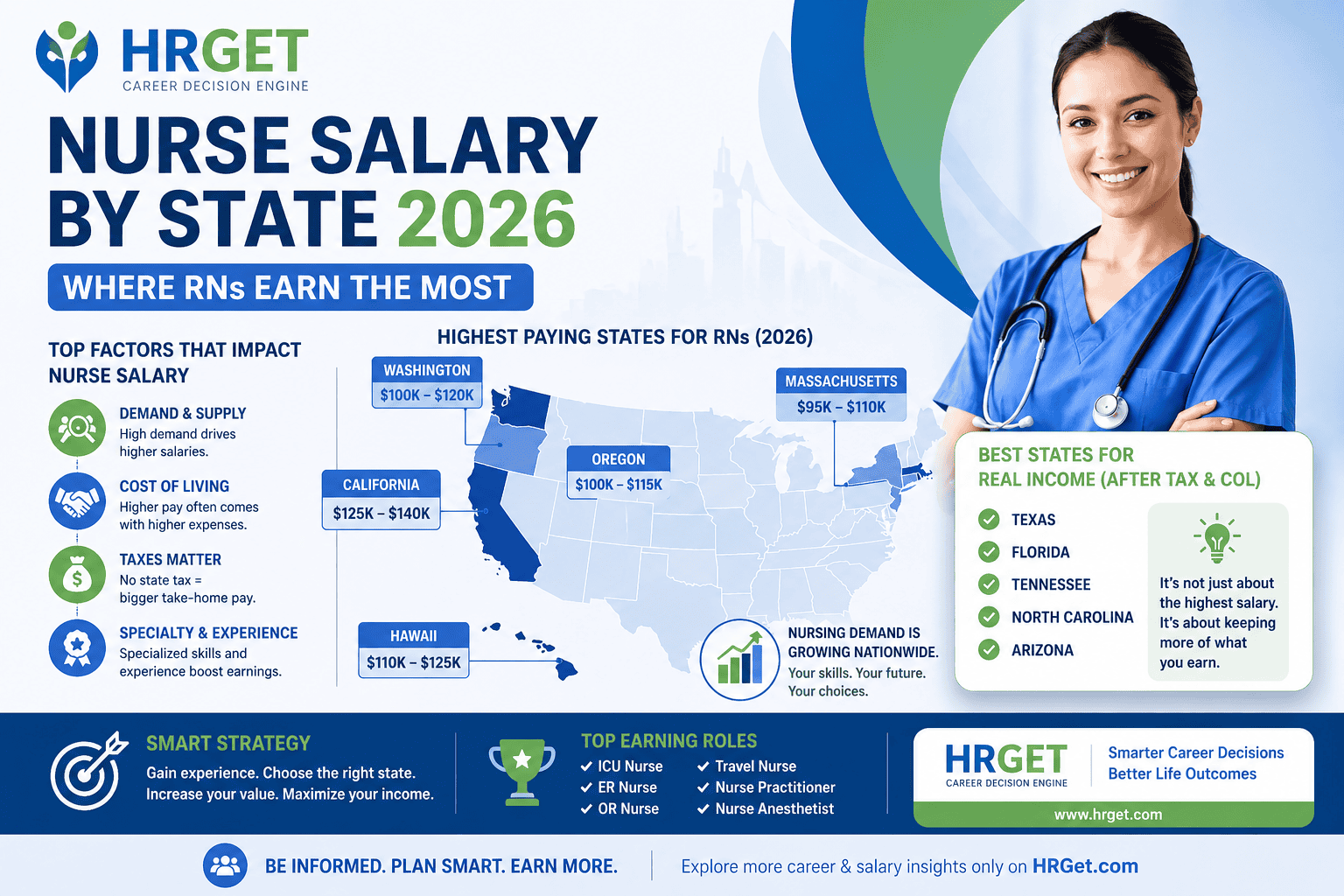
Let’s start with the headline numbers. Here’s where RN salaries are highest on paper in 2026, based on BLS data, state hospital association reports, and compensation benchmarking from major health systems:
| State | Avg RN Salary (2026) | Key Driver |
|---|---|---|
| California | $125,000 – $140,000 | Unions + mandatory staffing ratios |
| Hawaii | $110,000 – $125,000 | Geographic isolation + high demand |
| Oregon | $100,000 – $115,000 | Strong union presence |
| Washington | $100,000 – $120,000 | No state income tax + high base wages |
| Massachusetts | $95,000 – $110,000 | Academic medical centers + Boston market |
| Nevada | $90,000 – $108,000 | No state tax + Las Vegas market growth |
| Alaska | $95,000 – $115,000 | Remote hardship premiums |
Here’s the honest reality check on these numbers: the top-paying states are generally also the most expensive and demanding to work in. California’s mandatory 1:5 nurse-to-patient ratio is a huge win for quality of care — but it also means hospitals are under enormous pressure, and burnout rates are real. Hawaii’s gorgeous, but housing costs in Honolulu are punishing.
Washington State is genuinely interesting because you get high wages and no state income tax. That combination is rarer than people realize, and it’s why Seattle-area hospitals have been aggressively recruiting from out-of-state throughout 2025 and into 2026.
Best States for Real Income After Cost of Living
This is where the conversation gets genuinely interesting — and where most nurses leave money on the table by not doing the analysis.
Net purchasing power is the number that actually determines your quality of life. It accounts for state income tax, housing costs, groceries, healthcare premiums out of pocket, and transportation. When you run these numbers, the rankings shift considerably.
| State | Avg RN Salary | State Tax | Why It Wins on Net Income |
|---|---|---|---|
| Texas | $75,000 – $95,000 | None | Low housing costs + zero income tax |
| Florida | $70,000 – $90,000 | None | Growing demand + no state tax |
| Tennessee | $65,000 – $85,000 | None | Extremely affordable housing |
| North Carolina | $70,000 – $90,000 | Low (4.5%) | Rapid hospital expansion + lower cost |
| Arizona | $80,000 – $100,000 | Low (2.5% flat) | Strong Phoenix/Tucson hospital growth |
| Washington | $100,000 – $120,000 | None | Best of both: high wages + no income tax |
Washington State deserves a special mention here because it sits in both tables — high gross salary and no income tax. For an RN earning $110,000 there, that’s roughly $7,000–$9,000 more per year in take-home versus an equivalently paid nurse in Oregon or California, just from the tax difference alone.
Texas is the sleeper pick. A nurse in Dallas or Houston earning $88,000 with no state income tax, a mortgage on a three-bedroom home for $1,800/month, and reasonable commute costs can realistically save $25,000–$35,000 per year. That same nurse in San Francisco earning $130,000 might save $20,000 — or less — after rent, state taxes, and the general cost of existing in that city.
💡 Pro Tip
When evaluating any state move, calculate your net monthly savings, not just your salary increase. Use the MIT Living Wage Calculator and your state’s marginal tax rate together. That number tells you more than any salary chart.
Lowest Paying States — and Why They Still Matter
The lowest-paying states for registered nurses in 2026 tend to cluster in the Deep South and parts of the rural Midwest. Mississippi, Alabama, Arkansas, South Dakota, and Iowa typically see average RN salaries between $58,000 and $76,000.
| State | Avg RN Salary (2026) | Strategic Value |
|---|---|---|
| Alabama | $60,000 – $75,000 | Very low competition, fast hiring |
| Mississippi | $58,000 – $72,000 | Easiest path to charge nurse/leadership |
| Arkansas | $60,000 – $75,000 | Critical shortage = rapid advancement |
| South Dakota | $62,000 – $78,000 | No state tax offsets lower wages |
Here’s the take most articles miss: if you’re 1–3 years into your career and you’re in a lower-paying state, you may actually be building career capital faster than your peers in competitive coastal markets. Understaffed hospitals promote nurses quickly. You get more variety, more responsibility, and — crucially — a clinical résumé that travel agencies and high-paying hospitals actively want.
I’ve spoken with nurses who spent two years at a 100-bed hospital in rural Arkansas, then jumped to travel nursing and doubled their income within 18 months. The low-pay state was the launchpad, not the destination.
Real Scenario: California vs Texas vs Florida
📋 Scenario Parameters
Profile: RN with 5 years of experience, Staff Nurse (Med-Surg), no specialty certifications yet, single adult household
| Factor | California (LA) | Texas (Dallas) | Florida (Tampa) |
|---|---|---|---|
| Gross Salary | $130,000 | $90,000 | $85,000 |
| State Income Tax (est.) | ~$11,000 | $0 | $0 |
| Avg Monthly Rent (1BR) | ~$2,400 | ~$1,400 | ~$1,500 |
| Annual Rent Cost | $28,800 | $16,800 | $18,000 |
| Savings Potential | Medium (~$18–22K) | High (~$28–34K) | High (~$25–30K) |
| Burnout Risk | High | Moderate | Moderate |
The math doesn’t lie. A Texas RN earning $40,000 less on paper can still retire earlier, buy a house sooner, and experience less financial stress than their California counterpart. California offers prestige and a genuinely strong clinical environment — but it should be a deliberate career choice, not an assumption that more zeros equals more wealth.
Smart Strategy: How to Maximize Your RN Salary in 2026
Here’s where we move from information to actual strategy. These five levers, used together, are how the top-earning nurses I’ve seen in this profession consistently outperform their peers — regardless of where they live.
1. Chase roles, not just states. The single fastest salary move available to any RN in 2026 is specialization. ICU, ER, OR, and NICU nurses routinely earn $15,000–$30,000 more per year than general floor nurses in the same hospital. If you’re still on a general med-surg floor with 3+ years of experience, a lateral move to an ICU — even at the same hospital — can be transformative. Certifications like CCRN, CEN, and CNOR directly translate to higher hourly rates and better travel assignment offers.
2. Use state arbitrage strategically. This is one of the most underused income levers in nursing. Base yourself in a low cost-of-living, no-income-tax state — think Texas, Tennessee, or Nevada — and take travel assignments in California, Washington, or the Northeast. You keep all the financial advantages of the lower-cost base state while collecting high-market pay rates during your contracts. Top travel nurses doing this consistently clear $120,000–$200,000 annually.
3. Optimize your shift selection. Night shift differentials typically add 10–20% to your base hourly rate. Weekend premium packages at many hospital systems can add another $8–$15/hour. These aren’t glamorous, but they compound significantly. A nurse deliberately picking nights and weekends can earn $8,000–$15,000 more per year than a colleague on the same unit doing day shifts — at exactly the same employer.
4. Job-hop strategically every 2–3 years. Loyalty to a single employer is one of the most expensive financial habits a nurse can have. Internal raises typically run 2–4% annually — rarely keeping pace with your actual market value increase. Nurses who move to a new employer every 2–3 years are routinely securing 15–30% salary jumps. The nursing job market in 2026 heavily favors the candidate, not the institution.
5. Consider travel nursing as a wealth phase, not a lifestyle. Many nurses resist travel nursing because it sounds disruptive. But a targeted 3–5 year travel nursing phase — especially in your early-to-mid career — can compress a decade of savings into half the time. You build clinical breadth, networking, and income simultaneously. It’s not a permanent lifestyle choice; it’s a deliberate financial acceleration strategy.
Common Mistakes Nurses Make When Comparing Salaries
❌ Mistake 1: Treating gross salary as real salary
Gross salary minus state income tax, federal tax, cost of living adjustments, and housing costs gives you a completely different picture. Always calculate net purchasing power, never gross salary, before making a relocation decision.
❌ Mistake 2: Staying too long at one hospital
Annual raises in nursing are incremental at best. The market rewards movement. Every year you stay past the 2–3 year mark without renegotiating or switching is a year you’re accepting below-market pay.
❌ Mistake 3: Ruling out travel nursing too early
Most nurses who say “travel nursing isn’t for me” haven’t actually run the numbers. Even one 13-week travel contract per year — without fully committing to travel nursing — can add $10,000–$20,000 to your annual income in premium contracts.
❌ Mistake 4: Ignoring specialty certifications
A CCRN or CEN certification often unlocks an immediate $2–$5/hour raise at many hospital systems — that’s $4,000–$10,000 annually for a credential that can be earned with focused study over a few months. The ROI is remarkable.
Should You Relocate for a Higher Nurse Salary?
Relocation is a major life decision and there’s no universal right answer. But there is a rational framework for thinking it through — one that goes beyond just looking at salary numbers.
| Move if… | Don’t move if… |
|---|---|
| Salary increase is 25% or more after cost-of-living adjustment | Higher expenses cancel most or all of the salary gain |
| Career growth (specialty access, leadership track) is significantly better | The new market has a higher burnout or turnover rate |
| You’re within 3–5 years of a major financial goal (home purchase, debt payoff) | You’d be separating from critical family or support networks |
| The new state has no income tax or substantially lower tax burden | You haven’t fully maximized earning potential in your current market first |
The optimal career path I’ve seen work repeatedly looks like this: start in a high-demand state (even if lower-paying) to build your clinical résumé quickly, transition into a specialty, then move into travel nursing or a high-wage/low-tax state for your peak earning years. Settle in a low-cost state once you’ve built the financial foundation you want. It sounds like a lot of moves, but nurses who execute this deliberately — even partially — consistently outperform those who simply stay put and hope for raises.
Frequently Asked Questions
Which state pays nurses the highest salary in 2026?
California leads nationally with average RN salaries of $125,000–$140,000, driven by mandatory nurse-to-patient ratios, strong union contracts, and the California Nurses Association’s collective bargaining power. However, high state income taxes and cost of living significantly reduce take-home pay compared to the gross figure.
Which state is the best financially for nurses overall?
Washington State and Texas consistently deliver the best combination of competitive wages and tax efficiency. Washington offers $100,000–$120,000 with no state income tax. Texas pays $75,000–$95,000 but with zero income tax and substantially lower housing costs — often producing higher actual savings than California.
What is the average RN salary in the US in 2026?
The national average RN salary in 2026 falls in the $78,000–$95,000 range depending on experience, specialty, and setting. Urban hospital nurses in high-cost metros earn well above this; rural and community hospital RNs typically fall below the national average but often benefit from lower living costs.
Do travel nurses earn significantly more than staff nurses?
Yes — often substantially. Travel nurses in 2026 can earn $120,000–$200,000+ annually, depending on specialty and assignment location. ICU and ER travel nurses in high-demand states (California, Washington, New York) command the highest contracts. The premium reflects both short-term commitments and the operational premium hospitals pay for immediate staffing coverage.
How can an RN increase their salary quickly?
The fastest levers are: switching to a high-acuity specialty (ICU, ER, OR), earning a specialty certification (CCRN, CEN, CNOR), changing employers every 2–3 years, adding night or weekend shift differentials, and taking travel assignments. Combining just two of these strategies typically produces 20–40% salary growth within 12–18 months.
Is it worth moving states to earn more as a nurse?
It depends on the net financial impact, not just the salary difference. If your cost-of-living adjusted income improves by 20% or more and you’re moving toward a career growth opportunity, relocation typically pays off. If the expense gap narrows the salary gain to less than 10%, the disruption cost rarely justifies the move.
Which nursing specialty pays the most in 2026?
Certified Registered Nurse Anesthetists (CRNAs) top the list at $200,000–$240,000 annually. Among staff RN specialties, ICU, cardiovascular OR, and interventional radiology nurses consistently earn the most. Travel nurses in these specialties add another 30–60% premium on top of standard staff rates.
The Bottom Line on Nurse Salary by State
Here’s what I want you to walk away with: the highest-paying state is rarely the best financial decision. Smart nurses in 2026 aren’t asking “which state pays the most?” — they’re asking “which state maximizes what I actually keep?”
That question leads you toward Washington, Texas, and Arizona just as readily as it leads you toward California. It leads you toward travel nursing, toward specialty certifications, toward strategic job movement. These are the levers that actually compound wealth in nursing — not the zip code on your hospital badge.
Nursing in 2026 is a high-income profession in a genuine candidate’s market. Burnout and ongoing shortages mean hospitals are competing for you — not the other way around. Use that leverage. Be deliberate. The nurses who approach their career like a compensation strategy — not just a job — consistently come out ahead.
📌 Related Reading
Thinking about negotiating your next offer? Read our guide on how to negotiate a salary offer — including the exact language and timing that moves the number in your favor.
Written by Daniel Carter, Director of Compensation & Benefits | Former Mercer consultant, 15+ years in compensation strategy across US and international markets. Last updated: 2026.

Eleanor Whitmore | Former Partner, Mercer | Advisor, World Economic Forum | 20+ Years in Global Compensation
Author bio: Eleanor Whitmore has spent over two decades shaping how the world’s leading organisations pay, retain, and reward talent. As a former Partner at Mercer and an advisor to World Economic Forum working groups on the Future of Work, she has designed compensation frameworks for Fortune 500 companies across the US, UK, Europe, and emerging markets. Based between London and New York, Eleanor writes for HRGet.com to translate boardroom-level pay strategy into actionable guidance for working professionals navigating real compensation decisions.